Mind-Wandering: Lost in Thought
Rodin’s sculpture The Thinker represents a man absorbed in thought. People may wonder if he is thinking about life’s deep questions. Likewise, teachers may wonder what students sitting at their desks are thinking about—are they focusing on their schoolwork, or are they just daydreaming?
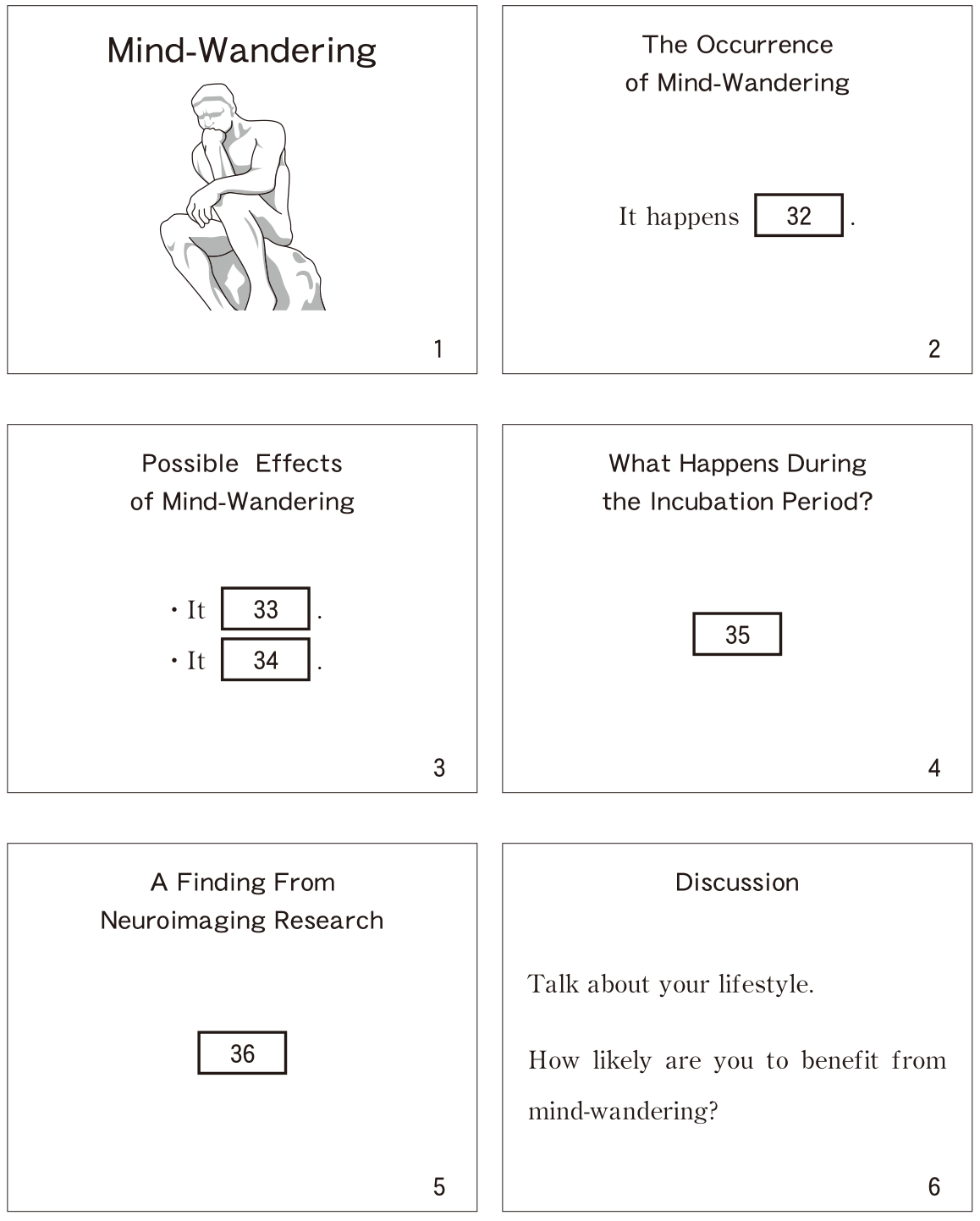
It is natural for the mind to switch between periods of focus and periods of rest. Even when we are supposed to be concentrating, we may not be paying attention to the task at hand. Scientists have found that we engage in daydreaming, also known as “mind-wandering,” approximately 50% of the time we are awake. While our minds are wandering, we are not thinking about anything special but our brains naturally come up with ideas, images, and emotions. In short, mind-wandering is a shift away from thoughts on the current task to other unrelated thoughts.
心のさまよい:考えに迷い込む
Rodinの彫刻『The Thinker』は、考えにふける男性を表している。彼が人生の深遠な問いについて考えているのかどうか、気になる人もいるだろう。同じように、教師は、机に座っている生徒たちが何を考えているのか気になることがある――学校の勉強に集中しているのだろうか、それともただ空想にふけっているのだろうか。
心が集中する時間と休む時間との間を行き来するのは自然なことである。集中しているはずのときでさえ、目の前の課題に注意を向けていないことがある。科学者たちは、私たちが起きている時間のおよそ50%を、空想、つまり「心のさまよい」として過ごしていることを発見した。心がさまよっている間、私たちは特に何かについて考えているわけではないが、脳は自然に考えやイメージ、感情を生み出す。要するに、心のさまよいとは、現在の課題についての思考から、関係のない別の思考へと移ることである。