Boost 共通テスト 英語リーディング2022年度
2022年度・追再試験

共通テスト英語 2022年度(令和4年度) 追再試験 第6問
本文と解答解説

問題を解いたら、意味のまとまりごとに本文を読み直しましょう。

1

問題PDF

2

全文訳

False Memories

What are memories? Most people imagine them to be something like video recordings of events in our minds. Whether it is a memory of love that we treasure or something more like failure that we fear, most of us believe our memories are a permanent record of what happened. We may agree that they get harder to recall as time goes on, but we think we remember the truth. Psychologists now tell us that this is not the case. Our memories can change or even be changed. They can move anywhere from slightly incorrect to absolutely false! According to well-known researcher Elizabeth Loftus, rather than being a complete, correct, unchanging recording, “Memory works a little bit more like a Wikipedia page.” Anyone, including the original author, can edit the information.

Serious research investigating “false memories” is relatively new. Scholars Hyman and Billings worked with a group of college students. For this experiment, first, the students’ parents sent stories about some eventful episodes from their child’s youth to the interviewers. Using this family information, they interviewed each student twice. They mentioned some actual experiences from the person’s childhood; but, for their experiment, they added a made-up story about an eventful wedding, encouraging the student to believe the fake wedding had really happened. The following two sections contain actual conversations from the interviews of one student. Missing words are indicated by “...”; author’s comments by “( ).”

誤った記憶

記憶とは何でしょうか。多くの人は、記憶を心の中にある出来事のビデオ記録のようなものだと想像します。大切にしている愛の記憶であれ、恐れている失敗のようなものであれ、私たちのほとんどは、記憶が起こったことの永久的な記録だと考えています。時間がたつにつれて思い出しにくくなることには同意するかもしれませんが、私たちは真実を覚えていると思っています。心理学者は現在、これは事実ではないと述べています。私たちの記憶は変化することもあれば、変えられることもあります。少し間違っているものから完全に誤ったものまで、どのようにもなり得るのです。有名な研究者Elizabeth Loftusによれば、記憶は完全で正確で変わらない記録というより、「Wikipediaのページに少し似た働きをします」。元の著者を含め、誰でも情報を編集できるのです。

「誤った記憶」を調べる本格的な研究は、比較的新しいものです。研究者のHymanとBillingsは、大学生のグループを対象に研究しました。この実験ではまず、学生の親が、子どもの頃の出来事に富んだ体験についての話を面接者に送りました。面接者はこの家族の情報を使って、それぞれの学生に2回面接しました。本人の幼少期に実際にあった体験をいくつか話題にしましたが、実験のために、出来事に富んだ結婚式についての作り話を加え、その偽の結婚式が本当にあったと学生が信じるよう促しました。次の2つの部分には、ある学生への面接で実際に交わされた会話が含まれています。抜けている語は「…」で示し、筆者のコメントは「( )」で示しています。
Interviewer: I Student: S

First Interview

I ...looks like an eventful wedding...you were five years old...playing with some other kids...

(The interviewer, referring to the false event as if the information came from the student’s parent, goes on to say that while playing with friends the student caused an accident and the bride’s parents got all wet.)

S I don’t remember...that’s pretty funny...

I ...seems that would be kind of eventful...

S ...a wedding. I wonder whose wedding...a wedding reception? I can totally see myself like running around with other kids...

I You could see yourself doing that?

S ...bumping into a table? Oh yeah, I would do that...maybe not a wedding...like a big picnic...

(The student is starting to believe that bumping into the table sounds familiar. As they finish, the student is asked to think over the conversation they had before the next session.)

面接者:I 学生:S

第1回面接

I …出来事に富んだ結婚式のようです…あなたは5歳でした…ほかの子どもたちと遊んでいて…

(面接者は、その情報が学生の親から来たものであるかのように偽の出来事に言及し、学生が友達と遊んでいる間に事故を起こし、新婦の両親がびしょぬれになったと続けて話す。)

S 覚えていません…それはかなり面白いですね…

I …それなら、何か出来事に富んだものになりそうですね…

S …結婚式。誰の結婚式だろう…結婚披露宴?ほかの子どもたちと走り回っている自分の姿なら、すっかり想像できます…

I 自分がそんなことをしている姿を想像できますか。

S …テーブルにぶつかった?ああ、私はそうしそうです…結婚式ではなかったかもしれません…大きなピクニックのようなもの…

(学生は、テーブルにぶつかったという話がなじみのあるものに聞こえ始め、信じ始めている。面接を終える際、次の面接までに、今回の会話について考えておくよう学生に求められる。)

Second Interview

(The interviewer has just asked about some real events from the student’s childhood and once again returns to the wedding discussed in the previous session.)

I The next one I have is an eventful wedding reception at age five.

S Yeah, I thought about this one...

(The student goes on to describe the people he got wet.)

S ...I picture him having a dark suit on...tall and big...square face...I see her in a light-colored dress...

(The student has new images in mind and can tell this story as if it were an actual memory.)

S ...near a tree...drinks on the table...I bumped the glasses or something...

(This student then provides more information on the couple’s clothing.)

The students participating in this experiment came to believe that the false experiences the interviewers planted were absolutely true. By the second interview some students thought everything previously discussed was based on information from their parents about real events. This suggests that, when talking about memories, word choice makes a big difference in responses.

Certain words lead us to recall a situation differently. Because the interviewer mentioned an “eventful” wedding several times, the student started having a false memory of this wedding.

第2回面接

(面接者は、学生の幼少期の実際の出来事について尋ねたところで、前回の面接で話題にした結婚式に再び戻る。)

I 次に私が持っているのは、5歳のときの出来事に富んだ結婚披露宴です。

S ええ、これについて考えてみました…

(学生は、自分がぬらした人々について続けて説明する。)

S …彼が濃い色のスーツを着ている姿が浮かびます…背が高くて大きく…四角い顔で…彼女が明るい色のドレスを着ている姿が見えます…

(学生の心には新しい映像が浮かび、まるで実際の記憶であるかのようにこの話をすることができる。)

S …木の近くに…テーブルの上に飲み物があって…私はグラスか何かにぶつかりました…

(この学生はその後、2人の服装についてさらに情報を述べる。)

この実験に参加した学生たちは、面接者が植え付けた誤った体験を完全に事実だと信じるようになりました。2回目の面接までには、以前に話し合ったことはすべて、実際の出来事について親から得た情報に基づいていると考える学生もいました。このことは、記憶について話すとき、言葉の選び方が回答に大きな違いをもたらすことを示しています。

特定の言葉によって、私たちはある状況を違った形で思い出します。面接者が「出来事に富んだ」結婚式について何度も話したため、学生はこの結婚式についての誤った記憶を持ち始めました。

Since the time of Sigmund Freud, called “the father of modern psychology,” mental therapy has asked people to think back to their childhood to understand their problems. In the late 20th century, people believed that recalling old memories was a good way to heal the mind, so there were exercises and interviewing techniques encouraging patients to imagine various old family situations. Now, we realize that such activities may lead to false memories because our memories are affected by many factors. It is not just what we remember, but when we remember, where we are when we remember, who is asking, and how they are asking. We may, therefore, believe something that comes from our imagination is actually true. Perhaps experts should start researching whether there is such a thing as “true memories.”

「現代心理学の父」と呼ばれるSigmund Freudの時代以来、精神療法では、人々に自分の問題を理解するため幼少期を振り返らせてきました。20世紀後半には、古い記憶を思い出すことが心を癒やすよい方法だと考えられていたため、患者にさまざまな昔の家族の状況を想像させる練習や面接技法がありました。現在では、私たちの記憶は多くの要因の影響を受けるため、そのような活動が誤った記憶につながる可能性があると分かっています。重要なのは、何を思い出すかだけではありません。いつ思い出すか、思い出すときにどこにいるか、誰が尋ねているか、そしてどのように尋ねているかも関係します。したがって、想像から生まれたものを実際には真実だと信じてしまうことがあります。専門家は、「真の記憶」というものが存在するのかどうかを研究し始めるべきなのかもしれません。

Summary notes: FALSE MEMORIES

Introduction

When she says “Memory works a little bit more like a Wikipedia page,” Elizabeth Loftus means that memories [39].

Research by Hyman & Billings

The first interview indicates that the student [40].

The results of their study suggest that [41] and [42].

Conclusions

People believe that memory is something exact, but our memories are affected by many things. While focusing on old events was a technique adapted to heal our minds, we must consider that [43].

まとめのメモ:誤った記憶

導入

Elizabeth Loftusが「記憶はWikipediaのページに少し似た働きをします」と言うとき、彼女は記憶が[39]という意味である。

HymanとBillingsによる研究

第1回面接は、その学生が[40]ことを示している。

彼らの研究結果は、[41]、そして[42]ことを示している。

結論

人々は記憶が正確なものだと考えていますが、私たちの記憶は多くのものに影響されます。古い出来事に焦点を当てることは心を癒やすために取り入れられた技法でしたが、[43]ことを考慮しなければなりません。

A Brief History of Units of Length

Since ancient times, people have measured things. Measuring helps humans say how long, far, big, or heavy something is with some kind of accuracy. While weight and volume are important for the exchange of food, it can be argued that one of the most useful measurements is length because it is needed to calculate area, which helps in the exchange, protection, and taxation of property.

Measuring systems would often be based on or related to the human body. One of the earliest known measuring systems was the cubit, which was created around the 3rd millennium BC in Egypt and Mesopotamia. One cubit was the length of a man’s forearm from the elbow to the tip of the middle finger, which according to one royal standard was 524 millimeters (mm). In addition, the old Roman foot (296 mm), which probably came from the Egyptians, was based on a human foot.

A unit of measurement known as the yard probably originated in Britain after the Roman occupation and it is said to be based on the double cubit. Whatever its origin, there were several different yards in use in Britain. Each one was a different length until the 12th century when the yard was standardized as the length from King Henry I’s nose to his thumb on his outstretched arm. But it was not until the 14th century that official documents described the yard as being divided into three equal parts — three feet — with one foot consisting of 12 inches. While this description helped standardize the inch and foot, it wasn’t until the late 15th century, when King Henry VII distributed official metal samples of feet and yards, that people knew for certain their true length. Over the years, a number of small adjustments were made until the International Yard and Pound Agreement of 1959 finally defined

the standard inch, foot, and yard as 25.4 mm, 304.8 mm, and 914.4 mm respectively.

The use of the human body as a standard from which to develop a measuring system was not unique to western cultures. The traditional Chinese unit of length called chi — now one-third of a meter — was originally defined as the length from the tip of the thumb to the outstretched tip of the middle finger, which was around 200 mm. However, over the years it increased in length and became known as the Chinese foot. Interestingly, the Japanese shaku, which was based on the chi, is almost the same as one standard foot. It is only 1.8 mm shorter.

The connection between the human body and measurement can also be found in sailing. The fathom (6 feet), the best-known unit for measuring the depth of the sea in the English-speaking world, was historically an ancient Greek measurement. It was not a very accurate measurement as it was based on the length of rope a sailor could extend from open arm to open arm. Like many other British and American units, it was also standardized in 1959.

The metric system, first described in 1668 and officially adopted by the French government in 1799, has now become the dominant measuring system worldwide. This system has slowly been adopted by many countries as either their standard measuring system or as an alternative to their traditional system. While the metric system is mainly used by the scientific, medical, and industrial professions, traditional commercial activities still continue to use local traditional measuring systems. For example, in Japan, window widths are measured in ken (6 shaku).

Once, an understanding of the relationship between different measures was only something traders and tax officials needed to know. However, now that international online shopping has spread around the world, we all need to know a little about other countries’ measuring systems so that we know how much, or how little, of something we are buying.

長さの単位の簡単な歴史

古代以来、人々は物を測ってきました。測定によって、人間は、ある程度の正確さで、物がどのくらい長いか、遠いか、大きいか、重いかを表せます。食料の重量と体積は交換に重要ですが、最も役立つ測定の一つは長さだと言えるでしょう。面積を計算するのに必要であり、財産の交換、保護、課税に役立つからです。

測定体系は、人間の身体を基準にしたり、それと関連づけられたりすることがよくありました。知られている最も古い測定体系の一つがcubitで、紀元前3000年頃にEgyptとMesopotamiaで作られました。1 cubitは、ある王室基準によれば524ミリメートル(mm)で、男性のひじから中指の先までの前腕の長さでした。さらに、古代Romanのfoot(296 mm)は、おそらくEgypt人から伝わったもので、人間の足を基準にしていました。

yardという測定単位は、Romanによる占領後にBritainで生まれたと考えられ、double cubitを基にしたと言われています。その起源が何であれ、Britainではいくつか異なるyardが使われていました。12世紀に、yardが、伸ばした腕の先にあるKing Henry Iの鼻から親指までの長さとして標準化されるまで、それぞれ長さが異なっていました。しかし、公文書でyardが3つの等しい部分、つまり3 feetに分けられ、1 footが12 inchesから成ると記されたのは14世紀になってからでした。この記述はinchとfootの標準化に役立ちましたが、King Henry VIIがfeetとyardsの公式の金属見本を配布した15世紀末になって初めて、人々はそれらの真の長さを確実に知りました。その後、いくつかの小さな調整が行われ、1959年の国際ヤード・ポンド協定によってついに定められました。

標準インチ、フィート、ヤードは、それぞれ25.4 mm、304.8 mm、914.4 mmです。

測定体系を発展させるための基準として人間の身体を使ったのは、西洋の文化だけではありません。chiと呼ばれる伝統的なChineseの長さの単位は、現在では1メートルの3分の1ですが、もともとは親指の先から伸ばした中指の先までの長さとして定められ、およそ200 mmでした。しかし、年月とともに長くなり、Chinese footとして知られるようになりました。興味深いことに、chiを基にしたJapaneseのshakuは、標準的な1フィートとほぼ同じです。わずか1.8 mm短いだけです。

人間の身体と測定のつながりは、航海にも見られます。英語圏で海の深さを測る単位として最もよく知られているfathom(6フィート)は、歴史的には古代Greekの測定単位でした。両腕を広げて船員が伸ばせるロープの長さを基にしていたため、あまり正確な測定ではありませんでした。ほかの多くのBritishおよびAmericanの単位と同じく、これも1959年に標準化されました。

1668年に初めて記述され、1799年にFrench政府が正式に採用したメートル法は、現在、世界で主流の測定体系になっています。この体系は、多くの国で、標準的な測定体系として、または伝統的な体系の代替として、徐々に採用されてきました。メートル法は主に科学、医療、工業の分野で使われていますが、伝統的な商業活動では、地域の伝統的な測定体系が今も使われ続けています。例えばJapanでは、窓の幅はken(6 shaku)で測られます。

かつて、異なる単位の関係を理解する必要があったのは、商人と税務官だけでした。しかし、今では国際的なオンラインショッピングが世界中に広がっているため、私たちは皆、購入するものがどのくらい、あるいはどのくらい少ないのかを知るために、他国の測定体系について少し知っておく必要があります。

Your presentation poster draft:

Different Cultures, Different Measurements

1. The purposes of common units

Standard units are used for: A. calculating how much tax people should pay B. commercial purposes C. comparing parts of the human body D. measuring amounts of food E. protecting the property of individuals

2. Origins and history of units of length

3. Comparison of units of length

Figure 1. Comparison of major units of length

4. Units today

あなたの発表ポスターの下書き:

異なる文化、異なる測定

1.共通の単位の目的

標準単位は次のために使われる: A.人々が支払うべき税額を計算する B.商業上の目的 C.人間の身体の部分を比較する D.食料の量を測る E.個人の財産を守る

2.長さの単位の起源と歴史

3.長さの単位の比較

図1.主要な長さの単位の比較

4.今日の単位

When you were checking the statements under the first poster heading, everyone in the group agreed that one suggestion did not fit well. Which of the following should you not include? [44]

A B C D E

Under the second poster heading, you need to write statements concerning units of length. Choose the two below which are most accurate. (The order does not matter.) [45] [46]

Inch and meter were defined by the 1959 International Yard and Pound Agreement. The chi began as a unit related to a hand and gradually became longer over time. The cubit is one of the oldest units based on the length of a man’s foot. The length of the current standard yard was standardized by King Henry VII. The origin of the fathom was from the distance between a man’s open arms. The origin of the Roman foot can be traced back to Great Britain.

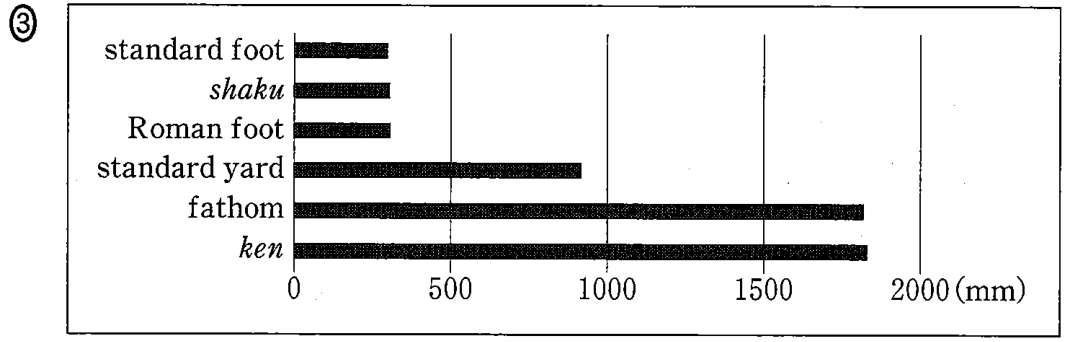
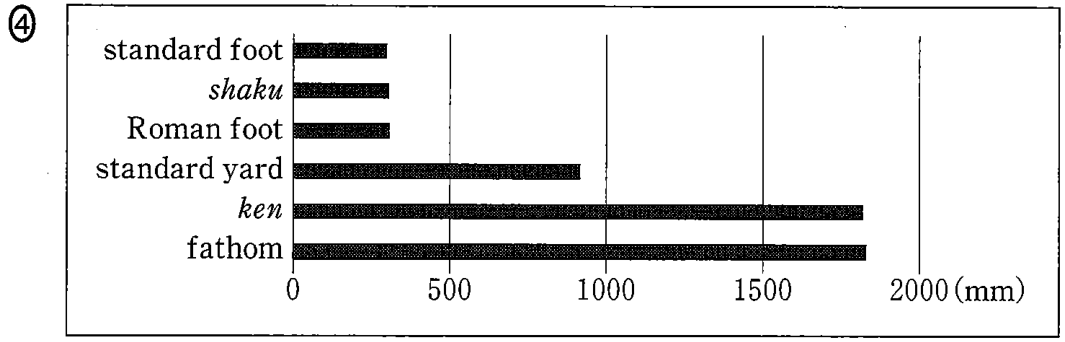
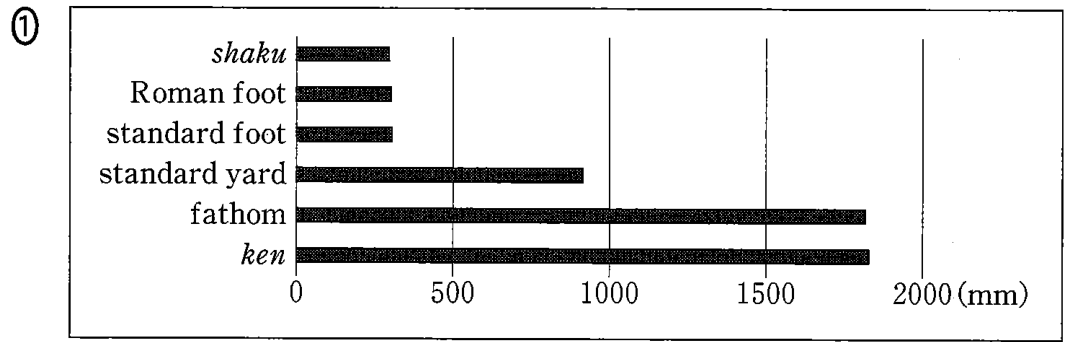
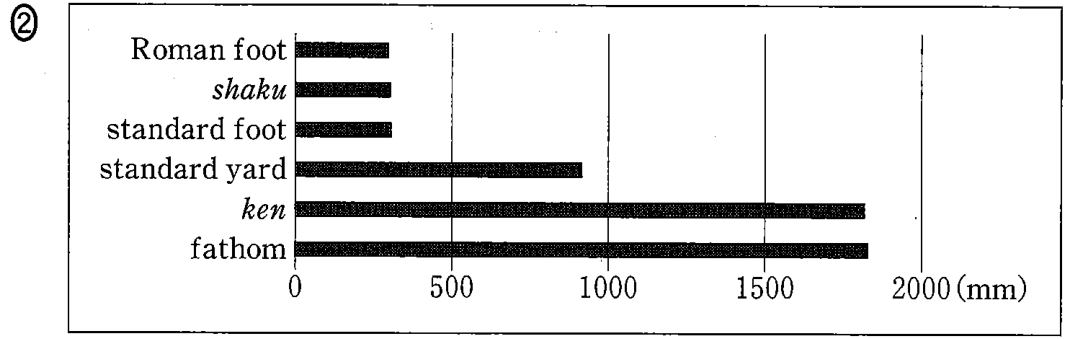
Under the third poster heading, you want a graphic to visualize some of the units in the passage. Which graph best represents the different length of the units from short (at the top) to long (at the bottom)? [47]

Under the last poster heading, your group wants to add a statement about today’s units based on the passage. Which of the following is the most appropriate? [48]

最初のポスター見出しの下の記述を確認していたとき、グループ全員が、ある提案はあまり適切ではないという意見で一致しました。次のうち、含めるべきでないものはどれですか。[44]

A B C D E

2番目のポスター見出しの下には、長さの単位に関する記述を書く必要があります。次のうち、最も正確なものを2つ選びなさい。(順不同)[45] [46]

インチとメートルは、1959年の国際ヤード・ポンド協定によって定義された。 chiは手に関連する単位として始まり、時間とともに徐々に長くなった。 cubitは、男性のfootの長さを基にした最も古い単位の一つである。 現在のstandard yardの長さは、King Henry VIIによって標準化された。 fathomの起源は、男性が両腕を広げたときの距離にあった。 Roman footの起源はGreat Britainまでたどることができる。

3番目のポスター見出しの下に、本文にあるいくつかの単位を視覚化する図を入れたいと思います。上から下へ、短いものから長いものへと異なる単位の長さを最もよく表しているグラフはどれですか。[47]

最後のポスター見出しの下に、本文に基づいて今日の単位についての記述を加えたいと思います。次のうち、最も適切なものはどれですか。[48]

3

解答解説

設問 1 の解答・解説

Choose the best option to complete statement ____.

訳

[39]の文を完成させるのに最も適切な選択肢を選びなさい。

Loftusの比喩は、記憶が固定された記録ではなく、後から情報を書き換えられる性質を説明します。したがって②です。

選択肢を比べる

1. are an account of one’s true experiences

訳

人の真実の体験の記録である

記憶が真実の経験だけを記録するとは述べていません。

2. can be modified by oneself or others

○ 正解
訳

自分自身や他人によって変更されることがある

本人を含む誰でも情報を編集できるという比喩に合います。

3. may get harder to remember as time goes by

訳

時間がたつにつれて思い出しにくくなることがある

思い出しにくくなることは冒頭の一般的な考えで、比喩の中心ではありません。

4. should be shared with others freely

訳

他人と自由に共有すべきである

記憶を他人と自由に共有すべきだという主張はありません。

設問 2 の解答・解説

Choose the best option to complete statement ____.

訳

[40]の文を完成させるのに最も適切な選択肢を選びなさい。

第一インタビューでは、学生は最初に覚えていないと答え、その後も結婚式だと確信せず推測しています。したがって④です。

選択肢を比べる

1. described all the wedding details to the interviewer

訳

面接者に結婚式の詳細をすべて説明した

結婚式の詳細を説明していません。

2. knew about an accident at a wedding from childhood

訳

幼少期の結婚式での事故について知っていた

事故の話はinterviewerが提示した偽情報です。

3. was asked to create a false story about a wedding

訳

結婚式についての偽の話を作るよう求められた

偽話を作るよう依頼されたのではありません。

4. was unsure about something the interviewer said

○ 正解
訳

面接者が言ったことの何かについて確信が持てなかった

説明に確信を持たず、推測にとどまっています。

設問 3 の解答・解説

Choose the two best statements for ____ and ____. (The order does not matter.)

訳

[41]と[42]に入る最も適切な記述を2つ選びなさい。(順不同)

起きていない結婚式を記憶として語ったため③、またeventful weddingという表現が反応に影響したため⑤です。順不同なので[41]・[42]には③と⑤を割り当てます。

組み合わせ(順不同)

1. false events could be planted easily in young children’s memories

訳

幼い子どもの記憶には、偽の出来事を簡単に植え付けられる可能性がある

対象はcollege studentsで、幼い子どもに限定されません。

2. our confidence levels must be related to the truthfulness of our memories

訳

私たちの確信の程度は、記憶の真実性と関係していなければならない

確信の強さは記憶の真実性を保証しません。

3. people sometimes appear to recall things that never happened to them

○ 正解
訳

人々は、ときどき自分に起こっていないことを思い出したように見える

起きていない結婚式を実際の記憶として語りました。

4. planting false memories is frequently criticized by researchers

訳

誤った記憶を植え付けることは、研究者から頻繁に批判されている

研究者が頻繁に批判されたという説明はありません。

5. the phrases used to ask about memories affect the person’s response

○ 正解
訳

記憶について尋ねるときに使われる表現は、その人の回答に影響する

質問に用いた語の選び方が反応に影響しました。

6. when a child experiences an eventful situation, it forms stable memories

訳

子どもが出来事に富んだ状況を経験すると、安定した記憶が形成される

記憶は安定するのではなく、変化し得ると述べています。 経験した出来事が安定した記憶になるとは述べていません。

設問 4 の解答・解説

Choose the best option for ____ to complete Conclusions.

訳

結論の[43]を完成させるのに最も適切な選択肢を選びなさい。

幼少期を振り返らせる心理療法は、想像を促すことで偽の記憶を生む可能性があります。そのため、従来考えられていたほど有益でないかもしれない③です。

選択肢を比べる

1. asking about our memories will help us remember more clearly

訳

記憶について尋ねることは、私たちがより明確に思い出すのに役立つ

質問は記憶を明確にするだけでなく、偽の記憶を作る可能性があります。

2. the technique focuses on who, what, when, where, and how

訳

この技法は、誰が、何を、いつ、どこで、どのようにという点に焦点を当てている

who・what・when・where・howは影響要因の説明です。

3. this mental therapy approach may be less helpful than we thought

○ 正解
訳

この精神療法の方法は、私たちが考えていたほど役立たない可能性がある

偽の記憶を生む可能性があり、従来ほど有効でないかもしれません。

4. we have to work on our ability to remember events more precisely

訳

私たちは、出来事をより正確に覚える能力を高めなければならない

記憶力を訓練すべきだという提案はありません。

設問 5 の解答・解説

Which of the following should you not include? ____

訳

含めるべきでないものはどれですか。[44]

第一ポスターは標準単位の目的を扱います。人体を基準にしたことはcubitやfootなどの起源の説明であり、単位を使う目的ではありません。したがって含めないのはC、③です。

選択肢を比べる

1. A

訳

A

面積計算はpropertyのtaxationと結び付くため、課税は用途に含まれます。

2. B

訳

B

測定は物の交換や商業活動に必要です。

3. C

○ 正解
訳

C

人体を基準にすることは単位の起源であり、使用目的ではありません。

4. D

訳

D

食料の交換ではweight and volumeが重要だと本文にあり、測定の用途として挙げられています。

5. E

訳

E

長さの測定は財産のprotectionに役立ちます。

設問 6 の解答・解説

Choose the two most accurate statements. ____ and ____. (The order does not matter.)

訳

最も正確な記述を2つ選びなさい。[45]と[46]。(順不同)

起源と歴史に関する正確な文は②と⑤です。chiは身体の長さを基準に始まり、その後長くなりました。fathomは船員が両腕を広げた長さに由来します。順不同なので[45]・[46]には②と⑤を割り当てます。

組み合わせ(順不同)

1. Inch and meter were defined by the 1959 International Yard and Pound Agreement.

訳

インチとメートルは、1959年の国際ヤード・ポンド協定によって定義された。

1959年の協定について本文が挙げるのはinch・foot・yardで、meterは含まれません。

2. The chi began as a unit related to a hand and gradually became longer over time.

○ 正解
訳

chiは手に関連する単位として始まり、時間とともに徐々に長くなった。

chiは身体の長さを基準に始まり、後に長くなりました。

3. The cubit is one of the oldest units based on the length of a man’s foot.

訳

cubitは、男性のfootの長さを基にした最も古い単位の一つである。

cubitは足ではなく、ひじから中指までのforearmです。

4. The length of the current standard yard was standardized by King Henry VII.

訳

現在のstandard yardの長さは、King Henry VIIによって標準化された。

Henry VIIは金属標準を配布しましたが、現在の値は1959年に定められました。

5. The origin of the fathom was from the distance between a man’s open arms.

○ 正解
訳

fathomの起源は、男性が両腕を広げたときの距離にあった。

fathomは両腕を広げた長さの綱を基準にしました。

6. The origin of the Roman foot can be traced back to Great Britain.

訳

Roman footの起源はGreat Britainまでたどることができる。

Roman footはEgyptiansに由来する可能性があり、Great Britainではありません。

設問 7 の解答・解説

Which graph best represents the different length of the units from short (at the top) to long (at the bottom)? ____

訳

上から下へ、短いものから長いものへと異なる単位の長さを最もよく表しているグラフはどれですか。[47]

Choice 1: original length comparison graph, including its circled choice number.
Choice 2: original length comparison graph, including its circled choice number.
Choice 3: original length comparison graph, including its circled choice number.
Choice 4: original length comparison graph, including its circled choice number.

Roman footは296 mm、shakuは約303 mm、standard footは304.8 mm、standard yardは914.4 mm、kenは約1818 mm、fathomは1828.8 mmです。短い順はRoman foot、shaku、standard foot、standard yard、ken、fathomなので②です。

選択肢を比べる

1. shaku / Roman foot / standard foot / standard yard / fathom / ken

shakuとRoman foot、kenとfathomの順が数値と逆です。

2. Roman foot / shaku / standard foot / standard yard / ken / fathom

○ 正解

六つの単位を短い順に正しく配置しています。

3. standard foot / shaku / Roman foot / standard yard / fathom / ken

Roman footはshakuより短いため、提示順が逆です。

4. standard foot / shaku / Roman foot / standard yard / ken / fathom

kenはfathomより短いため、提示順が逆です。

設問 8 の解答・解説

Which statement about today’s units is most appropriate? ____

訳

今日の単位について最も適切な記述はどれですか。[48]

metric systemが世界で優勢になった一方、地域の伝統的な測定体系も残っています。日本では窓の幅をkenで測る例もあるため、①が最も適切です。

選択肢を比べる

1. Although the metric system has become dominant worldwide, traditional measuring systems continue to play certain roles in local affairs.

○ 正解
訳

メートル法が世界で主流になったとはいえ、伝統的な測定体系は地域の事柄で一定の役割を果たし続けている。

metric systemが優勢でも、地域の伝統単位が使われ続けるという要点をまとめています。

2. Science and medicine use traditional units today to maintain consistency despite the acceptance of a widespread standardized measurement system.

訳

科学と医療は、広く標準化された測定体系が受け入れられているにもかかわらず、一貫性を保つために今日も伝統的な単位を使っている。

science and medicineは主にmetric systemを使うため、traditional unitsという部分が逆です。

3. The increase in cross-border online shopping has made the metric system the world standard.

訳

国境を越えたオンラインショッピングの増加によって、メートル法が世界標準になった。

オンラインショッピングは他国の単位を知る必要性の理由であり、metric system成立の原因ではありません。

4. Today’s units, such as the inch, foot, and yard, are based on the chi, whose origin is related to a part of the human body.

訳

インチ、フィート、ヤードのような今日の単位は、起源が人体の一部に関係するchiを基にしている。

inch・foot・yardがchiに基づくという説明は本文にありません。

4

読み方のポイントまとめ

第6問は、前半で「偽の記憶」がどのように生じるかを、HymanとBillingsの実験を通して読み取ります。記憶は出来事をそのまま保存した映像ではなく、後から自分や他人によって編集され得るものです。後半では、人体を基準にした古代の長さの単位から、yard・chi・shaku・fathom、さらにmetric systemへ至る歴史を整理します。要約、会話の変化、因果関係、数値比較、ポスター作成という目的別の情報整理が必要です。

  • Aでは、筆者の主張、第一インタビュー、第二インタビュー、実験結果、結論の順に整理します。会話だけでなく括弧内の筆者コメントも、学生の心理変化を示す重要な根拠です。
  • 要約空欄では、空欄の主語・動詞・抽象度を確認します。「memories ___」なら記憶の性質、「results suggest that ___ and ___」なら実験から導かれる一般化を選びます。
  • Bでは、ポスターの見出しごとに本文の該当段落を対応させます。目的、起源と歴史、長さの比較、今日の使用状況を混同しないことが大切です。
  • グラフでは本文の数値を同じ単位にそろえて短い順に並べます。Roman foot=296 mm、shakuはstandard footより1.8 mm短い約303 mm、standard foot=304.8 mm、standard yard=914.4 mm、ken=6 shaku、fathom=6 feet=1828.8 mmです。

間違えやすいポイント

第一インタビューで学生が場面を想像したことを、最初から本当の記憶を持っていたと読み違えやすいです。
「I don’t remember」から「maybe not a wedding」へ変化した順序を確認してください。

実験の具体例と、そこから導く一般的な結論を混同しやすいです。
偽の結婚式の記憶は具体例、word choiceが反応を変えることは一般化として分けます。

人体を基準にしたことを、単位を使う目的だと誤ることがあります。
第一ポスターは用途、第二ポスターは起源と歴史という見出しで判断します。

shakuとRoman foot、kenとfathomを名称だけで並べ替えやすいです。
本文のmm、6 feet、6 shakuを使って同じ単位に換算します。

1959年の標準化と、それ以前の身体を基準にした起源を混同しやすいです。
起源、途中の標準化、現在の標準値を時間軸で分けて整理してください。

次の問題にも使える読み方

会話の発言と筆者コメントを分けて読む
会話は出来事の表面、括弧内のコメントは発言が示す心理変化を説明します。両方をつなぐと、記憶が形成された時点を判断できます。
例:「I don’t remember」と、後の「I picture him having a dark suit」をつなぎ、後から具体的な像が加わったと読みます。

要約空欄の抽象度を合わせる
空欄が一場面の説明か、研究全体の一般化かを確認します。設問の主語と動詞に合う広さの選択肢を選びます。
例:「The results suggest that」には、個別の服装ではなく「人は起きなかったことを思い出す」のような一般化を入れます。

数値を同じ単位にそろえて比較する
長さの比較では、feetやshakuをmmに換算します。名称からの印象を避け、近い値も計算で確認できます。
例:fathomは6×304.8=1828.8 mm、kenは6 shakuなので、fathomがkenより長いと分かります。

ポスターの見出しと本文の段落を対応させる
本文全体を無差別に探さず、見出しが要求する範囲を限定します。目的なら第1段落、歴史ならcubit・yard、今日ならmetric systemの段落を確認します。
例:「Units today」では、metric systemの普及とlocal traditional systemsの存続を一緒に押さえます。

5

重要語句

false memory
偽の記憶。実際には起きていないことを起きたと信じる記憶。
permanent record
永久的な記録。
recall
思い出す、記憶を呼び戻す。
the case
事実、実情。
rather than
〜ではなく、むしろ。
eventful
出来事の多い、波乱に富んだ。
made-up story
作り話。
encourage A to do
Aに〜するよう促す。
bump into
〜にぶつかる。
plant a false experience
偽の経験を植え付ける。
word choice
語の選択、言葉の選び方。
think back to
〜を振り返って思い出す。
lead to
〜につながる、〜を引き起こす。
be affected by
〜の影響を受ける。
cubit
ひじから中指の先までを基準にした古代の長さの単位。
forearm
前腕。
standardize
標準化する。
originate in
〜に起源を持つ。
fathom
水深の単位。6 feet。
dominant
支配的な、主流の。
respectively
それぞれに、順に。