Boost 共通テスト 英語リーディング2024年度
2024年度・追再試験

共通テスト英語 2024年度(令和6年度) 追再試験 第6問
本文と解答解説

問題を解いたら、意味のまとまりごとに本文を読み直しましょう。

1

問題PDF

2

全文訳

第6問 (配点 24)

Your English teacher has assigned this article to you. You need to prepare notes to give a short talk.

Belief Perseverance

There may be some out-of-date rules at your school. If you ask your teachers to update these rules, your ideas may be rejected. Of course, most of their objections will be reasonable, but some may be caused by belief perseverance, the psychological characteristic of maintaining an existing belief despite any new information. Although this tendency itself is neither good nor bad, it may cause conflicts ranging from personal problems to social phenomena.

第6問(配点24)

英語の先生からこの文章を課題として出されました。短い発表をするためのメモを準備する必要があります。

信念固執

あなたの学校には、時代遅れになった規則がいくつかあるかもしれません。先生たちに規則を更新するよう求めても、あなたの提案は却下されるかもしれません。もちろん、先生たちの反対意見の大半にはもっともな理由があるでしょう。しかし、その一部は、信念固執、つまり新しい情報がどのようなものであっても、既存の信念を維持する心理的特性によって引き起こされている可能性があります。この傾向自体は良くも悪くもありませんが、個人的な問題から社会現象に至るまで、さまざまな対立を引き起こすことがあります。

A study published in 1980 by Craig A. Anderson and his colleagues describes this human tendency. In the first stage of their experiment, the participants were presented with evidence that led them to conclude that firefighters who were willing to take risks performed their jobs better. Surprisingly, even after the participants were told that the evidence was false, they were reluctant to change their conclusions. Why is it difficult to change our beliefs? This is partly because we have confirmation bias, a psychological tendency to look for information consistent with our existing beliefs. Also, in some cases, the more others attempt to prove our beliefs wrong, the more firmly we stick to them, which is called the backfire effect.

Craig A. Andersonとその同僚が1980年に発表した研究は、この人間の傾向について説明しています。実験の第1段階で、参加者たちは、危険を冒そうとする消防士のほうが仕事をよりうまく行うという結論に至る証拠を示されました。驚くべきことに、その証拠が誤りだったと知らされた後でさえ、参加者たちは自分たちの結論を変えることに消極的でした。なぜ私たちは信念を変えることが難しいのでしょうか。その理由の一つは、確証バイアスがあるからです。これは、既存の信念と一致する情報を探そうとする心理的傾向です。また場合によっては、他人が私たちの信念が間違っていることを証明しようとすればするほど、私たちはその信念にいっそう固執します。これをバックファイア効果と呼びます。

The case of Ignaz Philip Semmelweis demonstrates belief perseverance in one group in society. He was a 19th-century physician who wondered why more women died from a fever after giving birth in one place than in another. His data apparently indicated that handwashing could reduce the number of occurrences of the deadly fever. However, at that time, handwashing was not common among doctors. His potentially life-saving idea was ignored by the

medical community, and many doctors rejected it and even harassed him. Semmelweis’ claim was eventually accepted long after his death. This episode demonstrates how a group of people with belief perseverance can become aggressive towards innovators and ground-breaking ideas. This social reaction was named the Semmelweis reflex after this incident.

Ignaz Philip Semmelweisの例は、社会のある集団における信念固執を示しています。彼は19世紀の医師で、ある場所では別の場所よりも、出産後に発熱して亡くなる女性が多いのはなぜかと疑問に思いました。彼のデータは、手洗いによってこの命に関わる発熱の発生件数を減らせることを明らかに示しているようでした。しかし当時、医師の間では手洗いは一般的ではありませんでした。彼の、命を救う可能性のある考えは、

医学界に無視され、多くの医師はそれを拒絶し、彼を嫌がらせさえしました。Semmelweisの主張が最終的に受け入れられたのは、彼の死からずっと後のことでした。この出来事は、信念固執を持つ人々の集団が、革新者や画期的な考えに対して攻撃的になり得ることを示しています。この社会的反応は、この出来事にちなんでSemmelweis反射と名付けられました。

Understanding belief perseverance can give us insights into the ways people behave. Imagine that you want to study abroad, and your family strongly opposes it because they believe that the city you plan to live in is dangerous. Even after showing them data on the city’s crime rate, you may find out that your efforts end up only adding fuel to the fire. If you encounter this backfire effect, an alternative approach might be needed. You could ask your teacher to speak with your family on your behalf, taking advantage of a related behavior that people tend to trust the opinions of an authority.

If someone presents you with hard-to-believe information, be careful not to reject it immediately. If your internal voice warns you not to act on that information, it is time to remind yourself of belief perseverance. To be stubborn may not be good for you. However, in many cases, the persistence of existing beliefs is desirable or even necessary these days. Remember that the Internet conveys not only accurate but also unreliable information. Belief perseverance can also protect you from potentially fake information. In other words, take time to find out more before accepting new information. After all, we humans have developed belief perseverance over time to ensure our survival. Understanding human nature is one of the keys to keeping your life balanced.

信念固執を理解することは、人々の行動の仕方についての洞察を与えてくれます。あなたが留学したいと思っていて、住む予定の都市は危険だと家族が信じているため、家族が強く反対していると想像してください。その都市の犯罪率に関するデータを家族に見せても、努力の結果は、火に油を注ぐことにしかならないかもしれません。このバックファイア効果に遭遇したら、別の方法が必要になる可能性があります。人々は権威者の意見を信頼する傾向があるという、関連する行動を利用して、先生に代わりに家族と話してもらうことができます。

誰かが信じがたい情報を示してきたら、すぐに拒絶しないよう注意してください。もし心の中の声が、その情報に基づいて行動しないよう警告しているなら、信念固執について自分に思い出させる時です。頑固であることは、あなたにとって良くないかもしれません。しかし今日では、多くの場合、既存の信念を持ち続けることが望ましい、あるいは必要でさえあります。インターネットは正確な情報だけでなく、信頼できない情報も伝えていることを忘れないでください。信念固執は、偽物である可能性のある情報からあなたを守ることもあります。つまり、新しい情報を受け入れる前に、時間をかけてさらに調べてください。結局のところ、私たち人間は生き残るために、時間をかけて信念固執を発達させてきました。人間の本性を理解することは、生活のバランスを保つための鍵の一つです。

Your notes:

Belief Perseverance (BP)

BP: • is a tendency to maintain an existing belief despite any new information. • can be [39].

Outline by paragraph 1. Introduction to BP 2. Experiment and explanation 3. [40] 4. [41] 5. Final remarks

Stories mentioned in the article • The firefighters story shows us that [42]. • The Semmelweis story tells us that even a truly innovative idea with sufficient evidence can be initially rejected.

Practical lessons from the article Learning about the nature of human psychology helps us to [43].

あなたのメモ:

信念固執(BP)

BP: ・新たな情報があっても、既存の信念を維持する傾向である。 ・[39]ことがある。

段落ごとの概要 1. BPの導入 2. 実験と説明 3. [40] 4. [41] 5. 最後の考察

文章で取り上げられた話 ・消防士の話は、[42]ことを示している。 ・Semmelweisの話は、十分な証拠のある真に革新的な考えでさえ、最初は拒絶されることがあると教えている。

文章から得られる実践的な教訓 人間の心理の本質について学ぶことは、私たちが[43]のに役立つ。

問 1 Choose the best option for [39].

① a barrier which stops people from expressing their opinions

② a cause of positive or negative outcomes for anyone

③ a major disadvantage for people who are easily convinced

④ an obstacle preventing us from keeping our beliefs strong

問 2 Choose the best options for [40] and [41].

① A story of a doctor who rejected handwashing

② An example of the social consequences of BP

③ An example showing the difficulty of understanding others

④ Application of BP knowledge when convincing others

⑤ Strategies for effectively countering new information

⑥ Tendency to search for advice from specialists

問 3 Choose the best option for [42].

① BP appears to have an influence on anyone, even in situations one wouldn’t expect

② confirmation bias is found when people want to believe new information

③ the backfire effect often happens when a stubborn person’s opinion is rejected

④ the Semmelweis reflex is often observed in occupations where risks are common

問 4 Choose the best option for [43].

① analyze historical discoveries from a scientific point of view

② make reasonable decisions when dealing with new information

③ recognize immediately whether given information is true or not

④ understand when it is appropriate or necessary to take risks

問1 [39]に入る最も適切な選択肢を選びなさい。

①人々が自分の意見を表明するのを妨げる障壁

②誰にとっても良い結果または悪い結果をもたらす原因

③簡単に説得される人々にとっての大きな不利益

④私たちが信念を強く保つのを妨げる障害

問2 [40]と[41]に入る最も適切な選択肢を選びなさい。

①手洗いを拒絶した医師の話

②BPが社会にもたらす結果の一例

③他人を理解することの難しさを示す一例

④他人を説得するときのBPに関する知識の応用

⑤新しい情報に効果的に対抗するための方法

⑥専門家に助言を求める傾向

問3 [42]に入る最も適切な選択肢を選びなさい。

①BPは、予想もしない状況でさえ、誰にでも影響を及ぼすようだ

②確証バイアスは、人々が新しい情報を信じたいと思うときに見られる

③バックファイア効果は、頑固な人の意見が拒絶されたときによく起こる

④Semmelweis反射は、危険がよくある職業でしばしば観察される

問4 [43]に入る最も適切な選択肢を選びなさい。

①科学的な観点から歴史上の発見を分析する

②新しい情報を扱う際に、合理的な判断を下す

③与えられた情報が真実かどうかをすぐに見分ける

④危険を冒すことが適切または必要な時期を理解する

B

You are preparing for a science fair presentation on a scientific discovery, using the following magazine article.

“Smart” Fabrics

Through the years, the fabrics we use have evolved to suit our changing lifestyles and needs. Linen, made from the fibers of a plant called flax, is one of the oldest textiles in the world. It naturally reflects away the sun and its intense heat, and allows better airflow than other types of fabric. Light and airy, linen has long been the ideal fabric for warm climates. With industrialization and population growth, however, cotton became more commonly used since it was suitable for mass production. Cloth made from cotton can be heavy and can trap body heat though, which may make people feel uncomfortable in very hot and humid weather.

B

科学上の発見についての科学フェアでの発表を、次の雑誌記事を使って準備しています。

「スマート」繊維

長年にわたり、私たちが使う布地は、変化する生活様式や必要に合わせて進化してきました。亜麻という植物の繊維から作られるリネンは、世界で最も古い織物の一つです。リネンは太陽とその強烈な熱を自然に反射し、他の種類の布地よりも空気をよく通します。軽くて風通しのよいリネンは、温暖な気候に適した理想的な布地であり続けてきました。しかし、工業化と人口増加に伴い、綿は大量生産に適していたため、より一般的に使われるようになりました。ただし、綿で作られた布は重く、体の熱を閉じ込めることがあるため、非常に暑く湿度の高い天候では不快に感じることがあります。

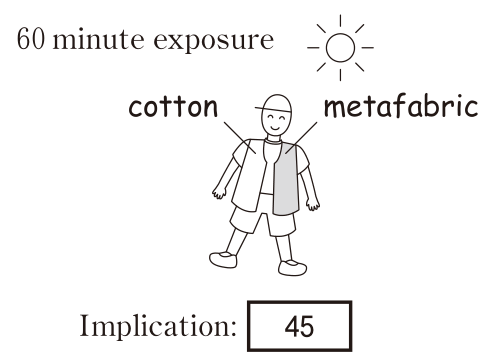
Newer materials are always being developed as technology progresses, and “smart” fabrics are a recent scientific breakthrough in the textile industry. Weaving flexible synthetic fibers into cloth can provide additional functions for the fabric. For example, scientists at the Huazhong University of Science and Technology made a new fabric called “metafabric” that deflects heat to keep people cooler. Such fabric can be used to create clothes that ease the discomfort people suffer when the temperature rises. In their experiment, a participant wore a vest consisting of two halves—one half cotton and the other half metafabric—and was exposed to direct sunlight for an hour. Underneath the cotton, the skin temperature soared to 37°C. In contrast, underneath the metafabric, the temperature rose by just one degree, from 31°C to 32°C.

技術が進歩するにつれて、より新しい素材が常に開発されており、「スマート」繊維は繊維産業における最近の科学的成果です。柔軟な合成繊維を布に織り込むことで、布地にさらなる機能を持たせることができます。例えば、Huazhong University of Science and Technologyの科学者たちは、人々をより涼しく保つために熱をそらす「metafabric」という新しい布地を作りました。このような布地を使えば、気温が上昇したときに人々が感じる不快感を和らげる衣服を作ることができます。実験では、参加者が綿とmetafabricの半分ずつで構成されたベストを着用し、1時間、直射日光にさらされました。綿の下では皮膚の温度が37℃まで急上昇しました。それに対して、metafabricの下では、温度は31℃から32℃へ、わずか1℃上昇しただけでした。

Another interesting example is a fabric that can detect sounds. The human ear picks up sound pressures, and the inner organs convert sound waves into mechanical vibrations and then into electrical signals. Similarly, “piezoelectric materials,” which are typically used for microphones or speakers, produce an electrical signal when mechanically bent.

もう一つの興味深い例は、音を検知できる布地です。人間の耳は音圧を受け取り、内部の器官が音波を機械的振動へ、さらに電気信号へと変換します。同様に、通常はマイクやスピーカーに使われる「圧電材料」は、機械的に曲げられると電気信号を生み出します。

Using this knowledge, a team of researchers at the Massachusetts Institute of Technology and the Rhode Island School of Design came up with a so-called “acoustic fabric.” The researchers wove a piezoelectric fiber into fabric and conducted a series of experiments. One experiment examined the fabric’s sensitivity to sound directions. They sewed two pieces of acoustic fabric onto the back of a shirt. Then, they clapped their hands at various angles away from the shirt. The fiber converted the sound first into mechanical vibrations, then into electrical signals that were stored on a device. The fabric was successfully able to pinpoint the angle of the sounds. This could lead to a useful application for individuals with hearing aids to identify the direction of a specific sound even in noisy surroundings.

In addition to functioning as wearable hearing aids, acoustic fabric can be used for other purposes such as tracking respiratory (lung), pulse, and cardiac (heart) conditions. Another experiment tested whether clothes with acoustic fibers could act as fabric stethoscopes to monitor a person’s subtle cardiac features. The research group attached a single fiber over the chest region on a shirt and found it accurately detected the wearer’s heart signals. Furthermore, this result indicated the possibility of utilizing the fabric in maternity clothes to check an unborn baby’s heartbeat.

この知識を利用して、Massachusetts Institute of TechnologyとRhode Island School of Designの研究者チームは、いわゆる「音響布」を考案しました。研究者たちは圧電繊維を布に織り込み、一連の実験を行いました。ある実験では、布地の音の方向に対する感度を調べました。彼らは音響布を2枚、シャツの背中に縫い付けました。次に、シャツからさまざまな角度だけ離れた位置で手をたたきました。繊維は音をまず機械的振動に、次に電気信号に変換し、それらを装置に保存しました。その布地は、音の角度を正確に特定することに成功しました。これは、補聴器を使う人が、騒がしい環境でも特定の音がどの方向から聞こえてくるのかを判断するのに役立つ応用につながる可能性があります。

音響布は身に着けられる補聴器として機能するだけでなく、呼吸(肺)、脈拍、心臓(心臓に関する)の状態を追跡するなど、別の目的にも使えます。別の実験では、音響繊維を使った衣服が、ある人の微細な心臓の特徴を監視する布製聴診器として機能するかを検証しました。研究グループはシャツの胸部にあたる部分に1本の繊維を取り付け、着用者の心臓の信号を正確に検出できることを発見しました。さらに、この結果は、胎児の心拍を確認するために、その布地をマタニティーウェアに利用できる可能性を示しました。

Researchers see applications of smart fabrics beyond clothing. A smart fabric with cooling performance can be applied to various products for different purposes, such as tents, car covers, curtains, and sunshade products. Acoustic fabrics can be integrated with spacecraft coatings to monitor cosmic debris, or be used to help detect cracks or strains in buildings. They can even be woven into a net to check on fish in the sea.

As these examples of textile innovation suggest, new fabrics can enhance our lives in many ways. You may not believe this, but the coolest things about these fabrics are that you can get “smart” while wearing them and some of them are machine-washable!

研究者たちは、衣服以外にもスマート繊維の用途があると考えています。冷却性能を持つスマート繊維は、テント、車のカバー、カーテン、日よけ製品など、さまざまな目的の製品に応用できます。音響布は宇宙船の外装に組み込んで宇宙ごみを監視したり、建物のひび割れやひずみの検出に役立てたりできます。海中の魚を確認するために、網に織り込むことさえできます。

これらの繊維の革新例が示すように、新しい布地は多くの方法で私たちの生活を向上させることができます。信じられないかもしれませんが、これらの布地の最もすばらしい点は、身に着けているとあなた自身が「スマート」になれることと、その一部が洗濯機で洗えることです。

Your slides:

Science Fair: A Scientific Discovery

[44]

Traditional Fabric • Linen • Cotton Smart Fabric • Metafabric • Acoustic fabric

Metafabric Experiment

60 minute exposure cotton metafabric Implication: [45]

Slide 3 metafabric experiment illustration showing a person wearing a vest divided into cotton and metafabric halves under direct sunlight for 60 minutes

Acoustic Fabric Experiment 1

Procedure: 1. Acoustic fabric was woven into a shirt. 2. [46] 3. Sound was converted into electrical signals. 4. [47] Results: • The directions of the claps were identified.

Acoustic Fabric Experiment 2

Purpose: • To see if the acoustic fiber works as a stethoscope Results: • The acoustic fiber heard the wearer’s heartbeat. Future benefits: • [48] • Maternity clothing

Applications Beyond Clothing

[49] A. To find weak places in buildings B. To listen for debris in space C. To locate a crying baby D. To protect vehicles from the sun

あなたのスライド:

科学フェア:科学上の発見

[44]

従来の布地 ・リネン ・綿 スマート繊維 ・Metafabric ・音響布

Metafabricの実験

60分間の曝露 綿 metafabric 示唆:[45]

音響布の実験1

手順: 1. 音響布をシャツに織り込んだ。 2. [46] 3. 音を電気信号に変換した。 4. [47] 結果: ・手をたたいた方向が特定された。

音響布の実験2

目的: ・音響繊維が聴診器として機能するか確認する 結果: ・音響繊維は着用者の心拍を検出した。 将来期待される利点: ・[48] ・マタニティーウェア

衣服以外への応用

[49] A. 建物の弱い場所を見つける B. 宇宙空間の宇宙ごみを探知する C. 泣いている赤ちゃんの位置を特定する D. 車両を太陽から守る

問 1 Which is the best title for the presentation on Slide 1? [44]

問 2 What does the result of the experiment by the Huazhong University of Science and Technology imply on Slide 3? Choose the best option for [45].

問 3 You are summarizing the steps in conducting the acoustic study on the smart shirt on Slide 4. Choose the best options for [46] and [47].

問 4 What can be inferred as a possible benefit of wearing an acoustic fabric on Slide 5? Choose the best option for [48].

問 5 You found an error on Slide 6. Which of the following should you remove? [49]

問1 スライド1の発表タイトルとして最も適切なものはどれですか。[44]

問2 Huazhong University of Science and Technologyによる実験結果は、スライド3で何を示唆していますか。[45]に入る最も適切な選択肢を選びなさい。

問3 スライド4のスマートシャツについて、音響研究を行う手順を要約しています。[46]と[47]に入る最も適切な選択肢を選びなさい。

問4 スライド5の音響布を着用することの可能な利点として、何が推測できますか。[48]に入る最も適切な選択肢を選びなさい。

問5 スライド6に誤りがあることに気づきました。次のうち、どれを削除すべきですか。[49]

3

解答解説

設問 1 の解答・解説

Choose the best option for ____.

訳

[39]に入る最も適切な選択肢を選びなさい。

メモは、BPを「新しい情報があっても既存の信念を維持する傾向」と定義しています。そのうえで本文は、この傾向自体はgood nor badであり、状況によって望ましい結果にも望ましくない結果にもつながると述べます。したがって[39]は②です。

選択肢を比べる

1. a barrier which stops people from expressing their opinions

訳

人々が自分の意見を表明するのを妨げる障壁

本文は、BPが意見を表明することを止める障壁だとは述べていません。中心は、既存の信念を維持することです。

2. a cause of positive or negative outcomes for anyone

○ 正解
訳

誰にとっても良い結果または悪い結果をもたらす原因

BPは善悪そのものではなく、個人的・社会的な対立など、肯定的または否定的な結果につながり得ます。

3. a major disadvantage for people who are easily convinced

訳

簡単に説得される人々にとっての大きな不利益

BPは説得されやすい人の欠点ではなく、新情報を受けても信念を変えにくい特徴です。

4. an obstacle preventing us from keeping our beliefs strong

訳

私たちが信念を強く保つのを妨げる障害

BPは信念を弱める障害ではなく、反対に既存の信念を維持する傾向です。

設問 2 の解答・解説

Choose the best options for ____ and ____.

訳

[40]と[41]に入る最も適切な選択肢を選びなさい。

アウトライン第3項はSemmelweisの事例を通じた社会的結果、第4項は家族の反対に対してBPの知識を応用する方法です。第3項は②、第4項は④なので、[40]=②、[41]=④です。

最初の位置

1. A story of a doctor who rejected handwashing

訳

手洗いを拒絶した医師の話

医師が手洗いを拒絶した話は、第3項で扱われる具体例であり、アウトラインの見出しとして狭すぎます。

2. An example of the social consequences of BP

○ 正解
訳

BPが社会にもたらす結果の一例

Semmelweisの主張が拒絶された事例は、BPが集団レベルで革新的な考えへの攻撃を生む社会的結果を示します。

3. An example showing the difficulty of understanding others

訳

他人を理解することの難しさを示す一例

第3項の中心は、他人を理解する難しさではなく、医療界が新しい主張を拒絶したことです。

4. Application of BP knowledge when convincing others

訳

他人を説得するときのBPに関する知識の応用

家族を説得する方法は次の段落の内容で、Semmelweisの社会的事例とは異なります。

5. Strategies for effectively countering new information

訳

新しい情報に効果的に対抗するための方法

第3項は新情報への対抗策を列挙する段落ではなく、BPの社会的な実例を説明します。

6. Tendency to search for advice from specialists

訳

専門家に助言を求める傾向

専門家への相談ではなく、集団の拒絶が革新的な考えに向けられたことが中心です。

最後の位置

1. A story of a doctor who rejected handwashing

訳

手洗いを拒絶した医師の話

医師の手洗い拒絶は前段落のSemmelweisの事例です。

2. An example of the social consequences of BP

訳

BPが社会にもたらす結果の一例

第4項は社会的結果の説明ではなく、家族の反対への具体的な対処を扱います。

3. An example showing the difficulty of understanding others

訳

他人を理解することの難しさを示す一例

家族の反対は、他人一般を理解する難しさではなく、BPとbackfire effectの具体例です。

4. Application of BP knowledge when convincing others

○ 正解
訳

他人を説得するときのBPに関する知識の応用

反証を示すだけでは逆効果になる場合、教師という権威者に家族へ話してもらうというBP知識の応用です。

5. Strategies for effectively countering new information

訳

新しい情報に効果的に対抗するための方法

新情報に対抗する一般的戦略ではなく、家族を説得するために権威者を介する具体策です。

6. Tendency to search for advice from specialists

訳

専門家に助言を求める傾向

専門家一般に助言を求めるのではなく、教師が家族に話すという限定された方法です。

設問 3 の解答・解説

Choose the best option for ____.

訳

[42]に入る最も適切な選択肢を選びなさい。

消防士の実験では、参加者は「危険を冒す消防士ほど仕事ができる」という結論を持ち、根拠が偽だと知らされても変更しませんでした。さらに本文は、同じ傾向が医療界や家族関係にも現れると示します。したがって[42]は①です。

選択肢を比べる

1. BP appears to have an influence on anyone, even in situations one wouldn’t expect

○ 正解
訳

BPは、予想もしない状況でさえ、誰にでも影響を及ぼすようだ

消防士の実験、Semmelweisの事例、家族の留学反対という異なる場面に同じ傾向が現れるため、BPは予想外の状況にも影響します。

2. confirmation bias is found when people want to believe new information

訳

確証バイアスは、人々が新しい情報を信じたいと思うときに見られる

confirmation biasは既存の信念と一致する情報を探す傾向であり、新情報を信じたいという意味ではありません。

3. the backfire effect often happens when a stubborn person’s opinion is rejected

訳

バックファイア効果は、頑固な人の意見が拒絶されたときによく起こる

backfire effectは反証によって信念が強まる現象ですが、本文はそれをこの選択肢のような人物・条件に限定していません。

4. the Semmelweis reflex is often observed in occupations where risks are common

訳

Semmelweis反射は、危険がよくある職業でしばしば観察される

Semmelweis reflexは危険な職業一般の現象ではなく、医療界がSemmelweisの主張を拒絶した事例に由来します。

設問 4 の解答・解説

Choose the best option for ____.

訳

[43]に入る最も適切な選択肢を選びなさい。

記事の結論は、インターネットには正確な情報だけでなく信頼できない情報もあるため、新情報を受け入れる前に時間をかけて調べるべきだというものです。これは新情報を吟味して合理的に判断することを示すため、[43]は②です。

選択肢を比べる

1. analyze historical discoveries from a scientific point of view

訳

科学的な観点から歴史上の発見を分析する

歴史的発見を科学的に分析することは、Semmelweisの事例の説明であり、結論の実践的助言ではありません。

2. make reasonable decisions when dealing with new information

○ 正解
訳

新しい情報を扱う際に、合理的な判断を下す

情報の信頼性を調べ、受け入れる前に判断するという本文の助言に対応します。

3. recognize immediately whether given information is true or not

訳

与えられた情報が真実かどうかをすぐに見分ける

本文は真偽を即座に見抜けるとは言わず、時間をかけて調査するよう勧めています。

4. understand when it is appropriate or necessary to take risks

訳

危険を冒すことが適切または必要な時期を理解する

危険を冒すべき時期を判断する話ではなく、新情報との向き合い方が結論です。

設問 5 の解答・解説

Which is the best title for the presentation on Slide 1? ____

訳

スライド1の発表タイトルとして最も適切なものはどれですか。[44]

Slide 1はB全体の発表題名です。本文はlinenやcottonの比較だけでなく、metafabricの冷却性能、acoustic fabricの音・心拍検出、衣服以外の応用まで扱います。これらを総括する題名は③です。[44]=③です。

選択肢を比べる

1. Bio-Based Textile Innovation

訳

生物由来の繊維の革新

本文の中心はlinenだけではなく、synthetic fibersを用いたsmart fabricsにも及びます。

2. First Fabric That Addresses New Challenges

訳

新たな課題に対応する初めての布地

新しい課題への対応という側面はありますが、冷却・音検出・心拍検出などの多様な利点を十分に表しません。

3. Great Advantages of Clever Textiles

○ 正解
訳

賢い繊維の大きな利点

smart fabricsの冷却、音の方向検出、心臓信号の検出など、賢い繊維の多様な利点を総括しています。

4. The History of Fiber Design

訳

繊維設計の歴史

歴史だけでなく、実験結果と将来の応用が本文の大きな部分を占めています。

設問 6 の解答・解説

What does the result of the experiment by the Huazhong University of Science and Technology imply on Slide 3? Choose the best option for ____.

訳

Huazhong University of Science and Technologyによる実験結果は、スライド3で何を示唆していますか。[45]に入る最も適切な選択肢を選びなさい。

metafabricは熱を反射して人を涼しく保つ素材です。実験ではcotton側が37°Cまで上昇した一方、metafabric側は31°Cから32°Cへの1°C上昇でした。この差から、暑い天候でも快適さを保てると考えられるため、[45]は③です。

選択肢を比べる

1. It is far easier to create an outfit that keeps you warm.

訳

人を暖かく保つ服を作るほうがはるかに簡単である。

実験が示したのは保温ではなく、熱を反射して涼しくする性能です。

2. Light-colored fabric is more suitable for reflecting the sunlight.

訳

明るい色の布地のほうが太陽光を反射するのに適している。

本文は生地の色を比較せず、metafabricという素材の熱反射性能を比較しています。

3. The newly invented fabrics can keep people comfortable in hot weather.

○ 正解
訳

新しく発明された布地は、暑い天候でも人々を快適に保てる。

metafabric側の温度上昇が1°Cにとどまったため、暑い天候で人を快適にする素材だと推測できます。

4. You should wear a shirt made of the metafabric over your other clothing.

訳

他の衣服の上にmetafabric製のシャツを着るべきである。

本文はmetafabricを他の衣服の上に着るべきだとは述べていません。

設問 7 の解答・解説

You are summarizing the steps in conducting the acoustic study on the smart shirt on Slide 4. Choose the best options for ____ and ____.

訳

スライド4のスマートシャツについて、音響研究を行う手順を要約しています。[46]と[47]に入る最も適切な選択肢を選びなさい。

Acoustic Fabric Experiment 1の手順は、シャツに布を付ける、さまざまな角度から手をたたく、音を信号に変換する、装置に保存する、という流れです。空欄は[46]=②、[47]=④です。

最初の位置

1. Mechanical vibrations were bent by the fabric.

訳

機械的振動が布地によって曲げられた。

機械的振動は音を変換する過程であり、手をたたく前の手順ではありません。

2. Sounds from various directions were made.

○ 正解
訳

さまざまな方向から音を出した。

本文どおり、研究者はシャツからさまざまな角度に離れた位置で手をたたきました。

3. The acoustic fabric recorded the sounds.

訳

音響布が音を記録した。

布は音を単に記録したのではなく、振動と電気信号へ変換しました。

4. The output from each fiber was saved.

訳

各繊維からの出力を保存した。

信号を装置に保存するのは最後の手順です。

5. The researchers moved a shirt to different places.

訳

研究者たちはシャツをさまざまな場所へ動かした。

移動したのはシャツではなく、手をたたく位置・角度です。

6. Various types of sounds were measured by a shirt.

訳

さまざまな種類の音がシャツによって測定された。

音の種類を測ることではなく、音の方向を調べる実験です。

最後の位置

1. Mechanical vibrations were bent by the fabric.

訳

機械的振動が布地によって曲げられた。

布が機械的振動を曲げたのではなく、音が機械的振動へ変換されました。

2. Sounds from various directions were made.

訳

さまざまな方向から音を出した。

さまざまな方向から音を出す操作は手順2です。

3. The acoustic fabric recorded the sounds.

訳

音響布が音を記録した。

本文は音を記録したとは述べず、変換された信号を保存したと述べています。

4. The output from each fiber was saved.

○ 正解
訳

各繊維からの出力を保存した。

変換された電気信号を装置に保存する操作が手順4です。

5. The researchers moved a shirt to different places.

訳

研究者たちはシャツをさまざまな場所へ動かした。

シャツを別の場所へ動かす操作は本文にありません。

6. Various types of sounds were measured by a shirt.

訳

さまざまな種類の音がシャツによって測定された。

音の方向を特定できたことは実験の結果であり、手順4の操作ではありません。

設問 8 の解答・解説

What can be inferred as a possible benefit of wearing an acoustic fabric on Slide 5? Choose the best option for ____.

訳

スライド5の音響布を着用することの可能な利点として、何が推測できますか。[48]に入る最も適切な選択肢を選びなさい。

実験2では、胸部に付けた音響繊維が着用者の心臓信号を正確に検出しました。本文はさらに、胎児の心拍を確認するマタニティーウェアへの応用を示します。心臓信号を追跡できることから、心臓活動が不規則な人を助ける可能性を述べる①が適切で、[48]=①です。

選択肢を比べる

1. A person with irregular cardiac activity can get help.

○ 正解
訳

心臓の活動が不規則な人が助けを得られる。

心臓信号を監視できるため、心臓活動に問題のある人を支援する可能性を本文から読み取れます。

2. Acoustic fabric can give a person directions on the street.

訳

音響布が道で進む方向を教えてくれる。

音の方向検出は実験1の用途であり、実験2の心拍検出とは異なります。

3. It can help a person breathe more deeply and easily.

訳

より深く、楽に呼吸するのを助けることができる。

本文は呼吸の追跡可能性にも触れますが、深く呼吸しやすくする効果は述べていません。

4. It can reduce noise levels and answer phone calls.

訳

騒音の大きさを下げ、電話に応答できる。

騒音低減や電話応答の機能は本文にありません。

設問 9 の解答・解説

You found an error on Slide 6. Which of the following should you remove? ____

訳

スライド6に誤りがあることに気づきました。次のうち、どれを削除すべきですか。[49]

Slide 6のA・B・Dは、建物のひび・ひずみ、宇宙ごみ、車のカバーや日よけという本文中の応用に対応します。一方、泣いている赤ちゃんの位置を探す機能は本文にありません。したがって削除するのはCで、[49]=③です。

選択肢を比べる

1. A

訳

A

建物の弱い場所を見つける用途は、建物のcracks or strainsを検出する説明に対応します。

2. B

訳

B

宇宙空間のdebrisを監視する用途は、spacecraft coatingsへの応用として本文にあります。

3. C

○ 正解
訳

C

本文にあるのは胎児の心拍確認であり、泣いている赤ちゃんの位置を探す機能ではありません。

4. D

訳

D

車のカバーや日よけ製品は、車を太陽の熱から守る用途に対応します。

4

読み方のポイントまとめ

第6問は、Aの心理学記事「Belief Perseverance」と、Bの科学記事「“Smart” Fabrics」を読んで、メモやスライドの空欄を埋める問題です。Aでは、belief perseverance(新情報があっても既存の信念を維持する傾向)の定義、confirmation bias・backfire effectとの関係、消防士の実験やSemmelweisの事例、日常生活での対処法を整理します。Bでは、従来の布とsmart fabricsを比較し、metafabricの冷却実験、acoustic fabricの音の方向・心拍検出実験、衣服以外への応用を、目的・手順・結果・将来性に分けて読み取ります。

  • AとBを別々の文章として読み、Aは心理学用語と事例、Bは素材・実験・応用という骨格を先に把握します。
  • メモやスライドの空欄は、直前の語句だけで決めず、対応する段落全体の役割と照合します。
  • 実験問題では、目的・手順・結果・含意を分けます。数値や動作は結果・手順の根拠になり、将来の用途は応用欄の根拠になります。
  • 選択肢に本文と同じ語があっても、主語・対象・条件・目的が変わっていないかを確認します。
  • 複数空欄は組合せ全体を確認します。[30]・[31]は順不同ですが、第6問では[40]・[41]、[46]・[47]は本文の順序に対応します。

間違えやすいポイント

Aの空欄で、本文中に登場した単語をそのまま選びやすいです。
空欄が定義、段落見出し、具体例のまとめのどれを求めているかを確認し、単語の登場ではなく文全体の役割に合う選択肢を選びます。

confirmation bias、belief perseverance、backfire effectを同じ意味として扱いやすいです。
belief perseveranceは信念を維持する全体的傾向、confirmation biasは一致する情報を探す傾向、backfire effectは反証によって信念がさらに強まる現象として区別します。

消防士の実験とSemmelweisの事例を、職業や科学の問題だけだと考えやすいです。
本文は学校規則や家族の留学反対にも話を広げています。誰の問題かではなく、反証を受けても信念を維持する構造に注目します。

Bの実験手順で、結果や将来の応用を手順として選びやすいです。
手をたたく、信号に変換する、装置に保存するという動作を時系列で抜き出し、「方向を特定できた」は結果として分けます。

赤ちゃんに関する選択肢を、本文の胎児の心拍検出と同じだと判断しやすいです。
主語・対象・目的を確認します。胎児の心拍を調べることと、泣いている赤ちゃんの位置を探すことは、対象も機能も異なります。

次の問題にも使える読み方

定義と具体例を分けて読む
定義文は抽象的な意味を示し、その後の実験や人物の話はその意味を具体化します。「この事例が示すこと」を問われたら、細部を一段抽象化して選びます。
例:消防士の実験から、BPは職業に限らず、異なる状況でも信念の変更を妨げるとまとめます。

段落の主題を一文で言い換える
各段落を読み終えたら、誰・何について、何が起きたかを一文でメモします。アウトライン問題では、この一文と選択肢を照合します。
例:Semmelweisの段落は「革新的な主張が集団に拒絶された社会的事例」と要約できます。

実験を目的・手順・結果・応用に分解する
科学記事では、何を調べるのか、何をしたのか、何が分かったのか、何に使えるのかを分けます。スライドの空欄の種類を先に決めると、結果を手順に入れる誤りを防げます。
例:metafabric実験では、結果は31°Cから32°Cへの1°C上昇、含意は暑い天候で快適さを保てることです。

数値と比較表現を根拠にする
科学記事では、比較対象と数値が結論を支えます。温度、時間、増減幅を拾い、選択肢がその比較を正確に言い換えているか確認します。
例:cotton側37°C、metafabric側32°Cという差から、metafabricの冷却性能を判断します。

主語・対象・条件を照合する
選択肢の一部に本文と同じ語があっても、誰が何をするのか、どの条件で起きるのかが変われば別の内容です。
例:建物のひびを検出する用途と、建物の弱い場所を一般的に探す用途は近いですが、泣いている赤ちゃんを探す用途は本文にありません。
5

重要語句

belief perseverance
新しい情報があっても既存の信念を維持すること
out-of-date
時代遅れの、古くなった
objection
反対意見、異議
maintain
維持する
despite
〜にもかかわらず
phenomenon
現象
be presented with
〜を提示される
be reluctant to
〜することに気が進まない
confirmation bias
既存の信念と一致する情報を探す傾向
backfire effect
反証されるほど元の信念を強める効果
demonstrate
実証する、示す
innovator
革新者
ground-breaking
画期的な
on one’s behalf
〜の代わりに、〜のために
take advantage of
〜を利用する
convey
伝える、運ぶ
linen
亜麻布、リネン
flax
亜麻
mass production
大量生産
metafabric
熱を反射して涼しく保つ新素材の布
piezoelectric material
機械的な変形で電気信号を生む圧電材料
pinpoint
正確に特定する
respiratory
呼吸の
cardiac
心臓の
strain
ひずみ、負荷